Welcome to Arts Benicia!
Nurturing the Visual Arts in our Community for over 39 Years
Arts Benicia Gallery will be closed July 4th and July 5th
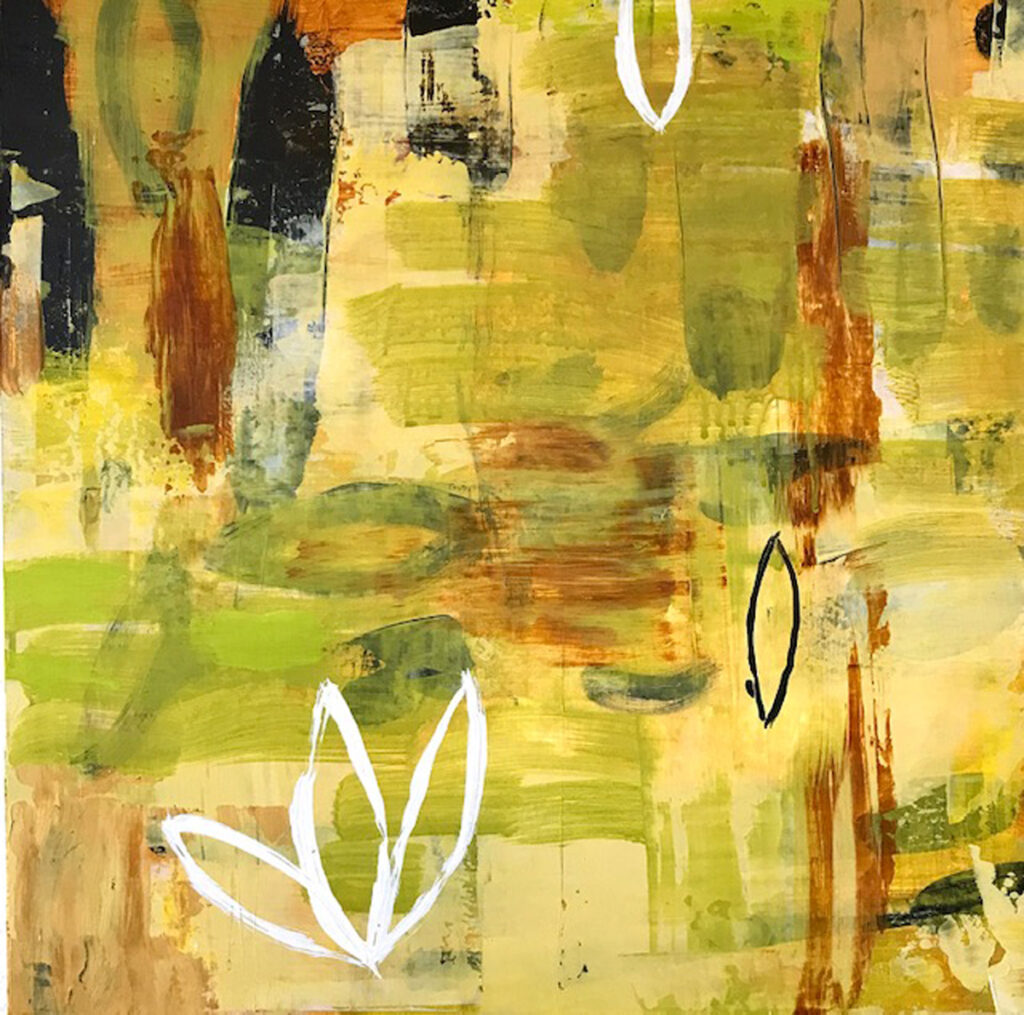
In The Gallery Now:
Art of a Community 2026
June 6 – July 19, 2026
1 Commandant’s Lane, Benicia
Our Annual Artist Members Only Show!
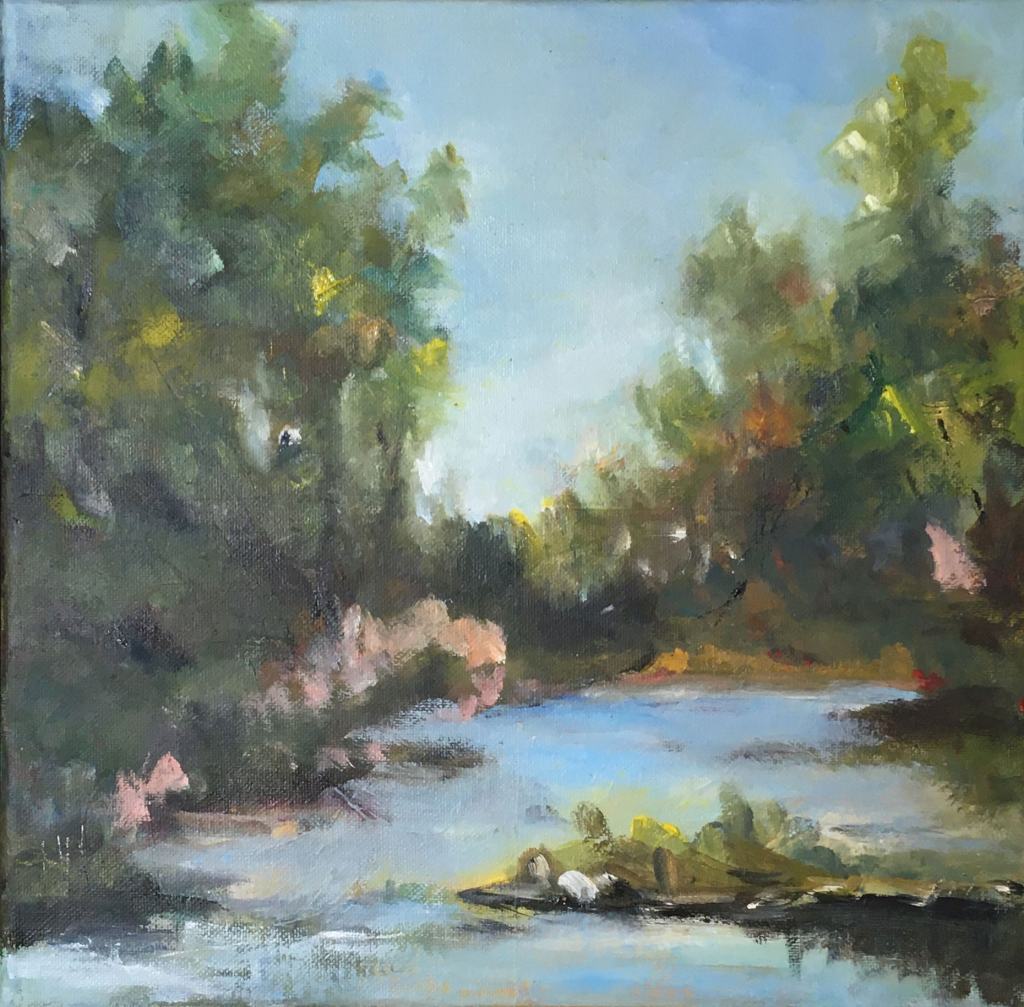
Artwork by Carol Dalton
Exhibition sponsored in part by:

Call for Entries:
Art Solano 2026
October 24 – December 20, 2026
1 Commandant’s Lane, Benicia
Glen Helfand, Juror
Art Solano celebrates the arts and artists of Solano County, of all 2D and 3D visual media, and video. Open to all artists in Solano County and to artists whose main art studio resides in Solano County. Cities in Solano County include Benicia, Dixon, Fairfield, Suisun City, Rio Vista, Vacaville, Vallejo, and CDP’s Allendale, Hartley and Green Valley.
We invite Solano County artists to submit entries for this exhibition.
Deadline for Entries: August 2, 2026 (11:59 pm Pacific Time)
EcoArt Camp 2026
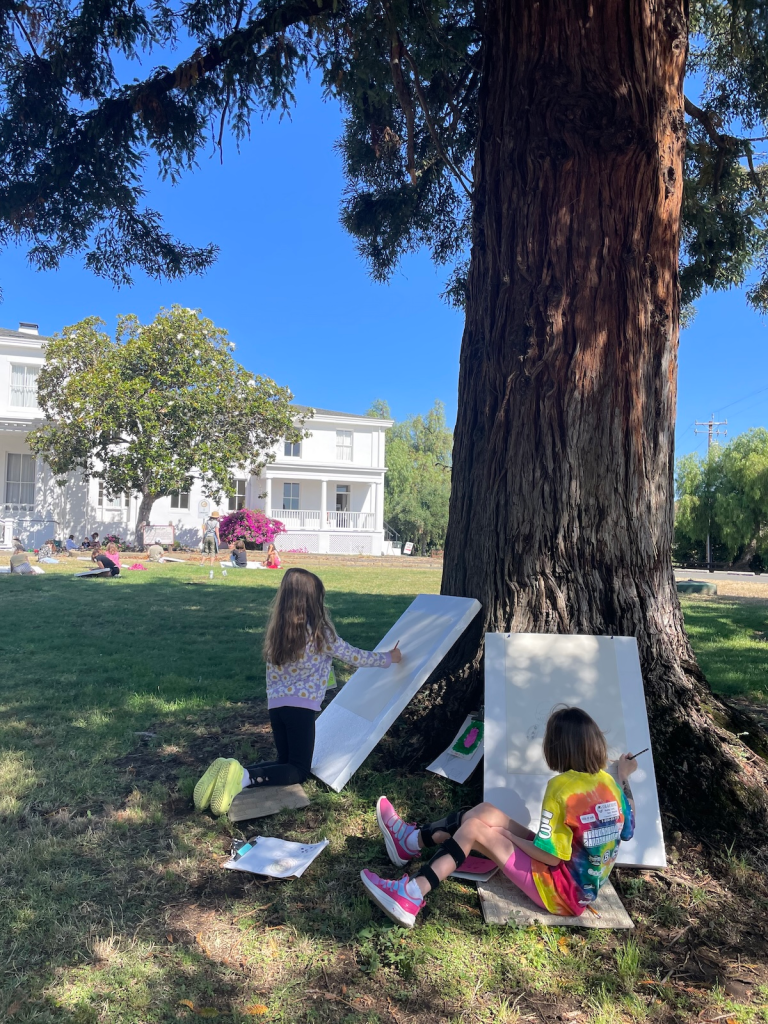
A summer art camp for incoming 3rd, 4th, 5th and 6th graders who like to build, sculpt, paint, draw, weave, and collage!
Arts Benicia’s EcoArt Camp promotes environmental consciousness through art making. We utilize the Visual Arts as an educational tool to encourage creative expression while gaining awareness of environmental sustainability, natural resources, and the potential of re-use. Students will be exposed to diversity in art within a process-based learning environment, creating with both traditional and non-traditional materials. Classes are led by professional teaching artists and are sure to stimulate and nurture the creative expression of our next generation of artists.
June Camp Session 1: 6/15 – 6/19 & June Camp Session 2: 6/22 – 6/26
Camp Days: Monday – Friday
Camp Time: 9:00 am -12:00 pm each day
Location: Arts Benicia, 1 Commandant’s Lane, Benicia
EcoArt Camp is partially supported by Wilson Family Foundation and NY2CA Gallery.
Arts Benicia Printmaking
Artist-in-Residence (AIR) Program
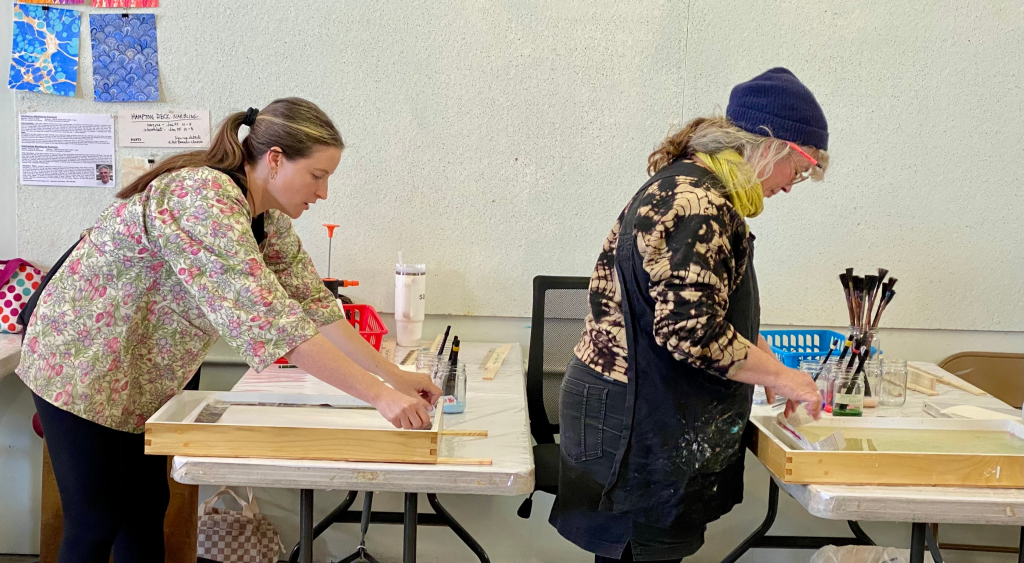
As part of the Artist in Residence Program, Arts Benicia will offer extended hours and days for skilled printmakers at the Printmaking Annex, located at 991 Tyler Street, Ste. 116 in the Benicia Arsenal District. To apply for the Printmaking Artist-in-Residence Program, use the button below. All Artist in Residence applicants will be required to interview with the Arts Benicia Print Studio
Manager.
Young Printmakers Program 2026
Arts Benicia is offering a Young Printmakers Program in spring 2026. We are inviting letters of interest from persons 18 – 25 years of age who wish to study a range of printmaking techniques at Arts Benicia’s Printmaking Annex, located in the historic Arsenal District in Benicia. Scholarships will be awarded to approximately ten students, providing one to two weekly printmaking classes for three to four months, and occasional special classes with professional instructors.
Arts Benicia Presents:
Mary Parkerson and Steve Mainini
Mary Parkerson at Happy Life Pottery, through June 2026
Steve Mainini at Benicia City Hall, January 20 – June 15, 2026
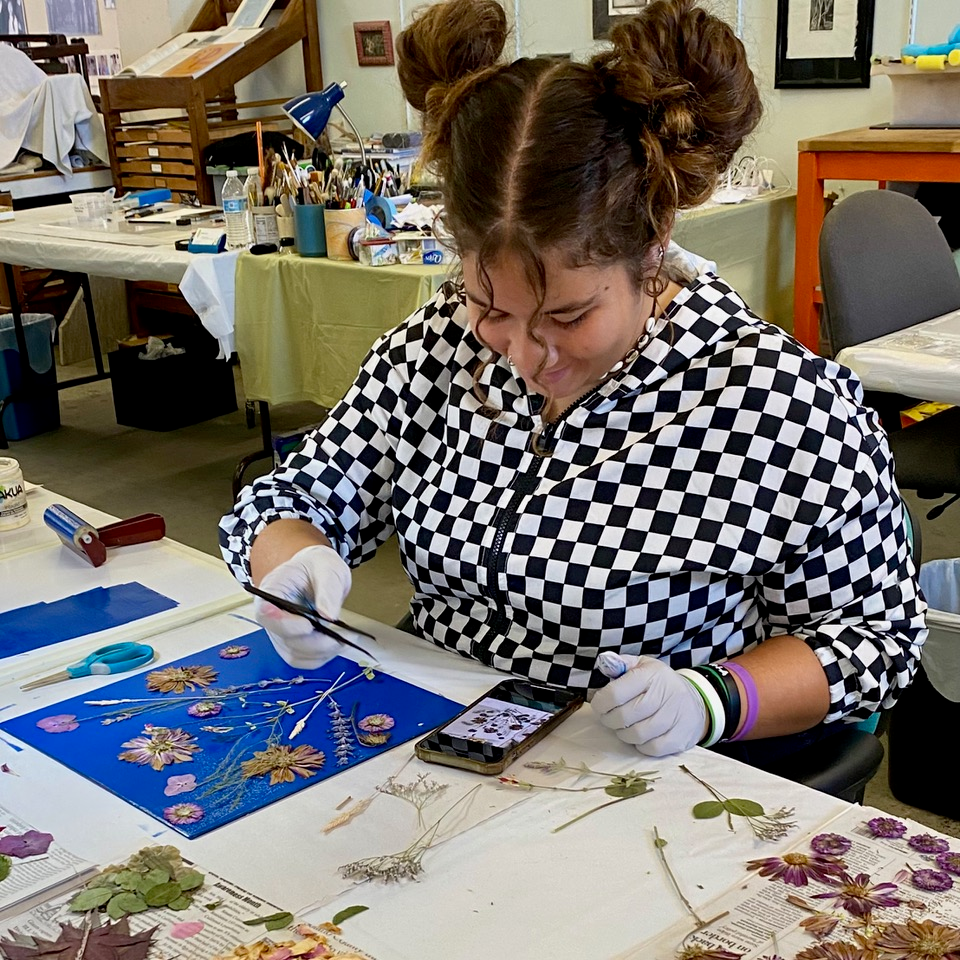
Arts Benicia Presents is an adjunct, outreach program of Arts Benicia showcasing our artist members. Through this program, Arts Benicia hosts several member artist solo or group exhibitions per year. Exhibitions are located at Happy Life Pottery and the Benicia City Council Chambers.
For more information, email info@artsbenicia.org
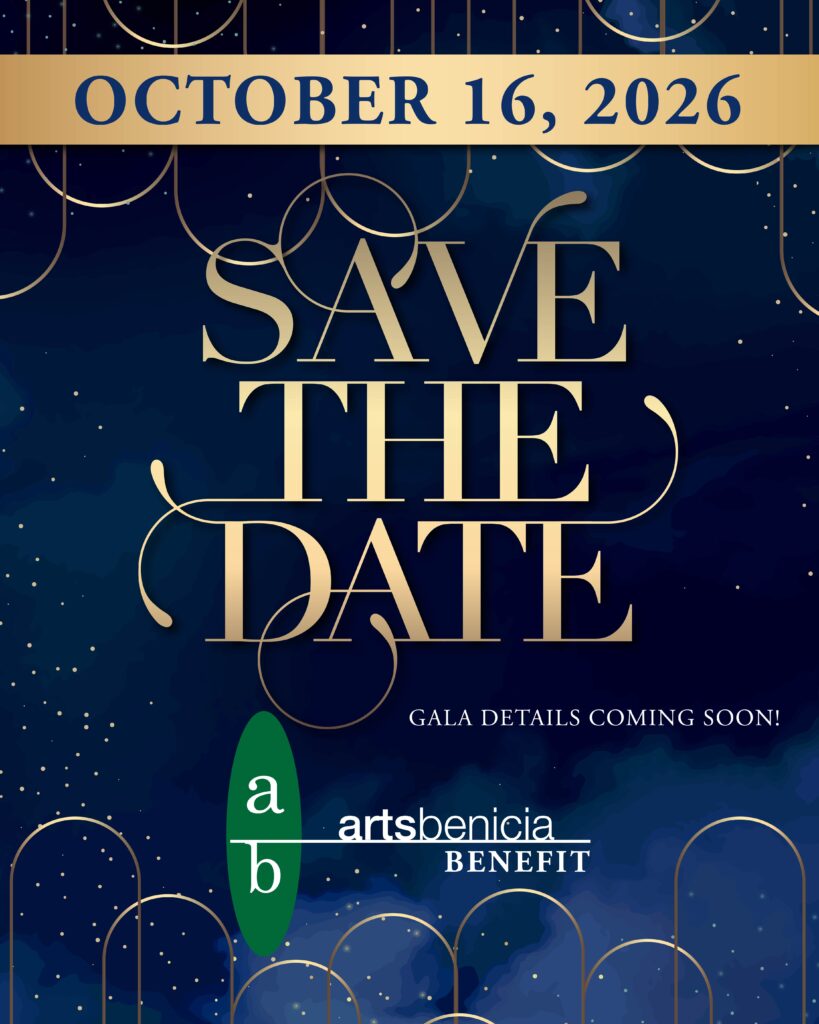
Save The Date!
Arts Benicia Gala
Exhibitions and Events made possible by generous donations from our sponsors




Introducing Arts Benicia
Docent Tours and Docent Training Program
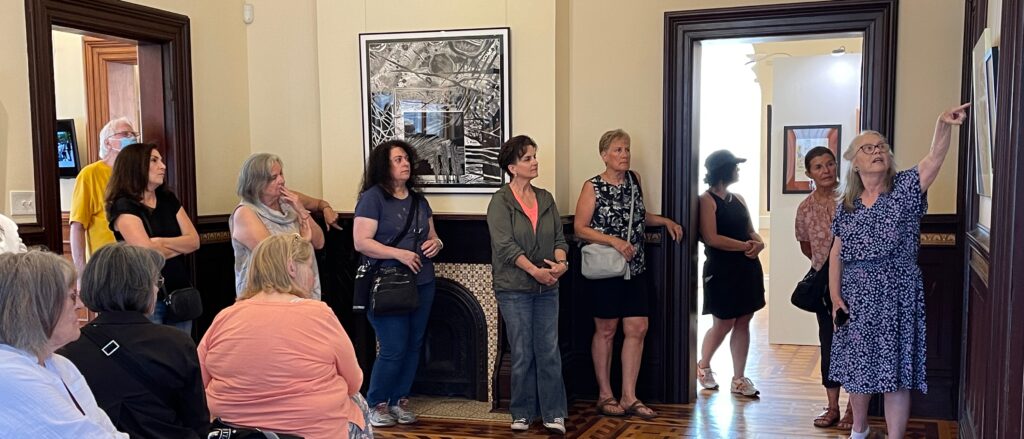
Are you interested in art, history, and community? The Arts Benicia Docent Program Training may be the perfect volunteer opportunity for you! Arts Benicia volunteer Docents lead tours of gallery exhibitions and the Commanding Officer’s Quarters (COQ). Docents receive special training in the history of the COQ, insights, and observation of the art and artists on exhibit, along with effective touring techniques. Through engaging tours and participatory discussions, Docents provide an invaluable service to our visitors and community. Applicants must be comfortable with public speaking and interacting with groups of people. Docents need to be available to lead one tour per month, including on weekends, and are requested to make a one-year commitment in order to participate in the training.
Stewarding our Water Resources:
Solano Artists Create, Collaborate & Educate Solano Water Stories
Made possible by a generous grant from the California Arts Council Creative Corps program.
Solano Water Stories
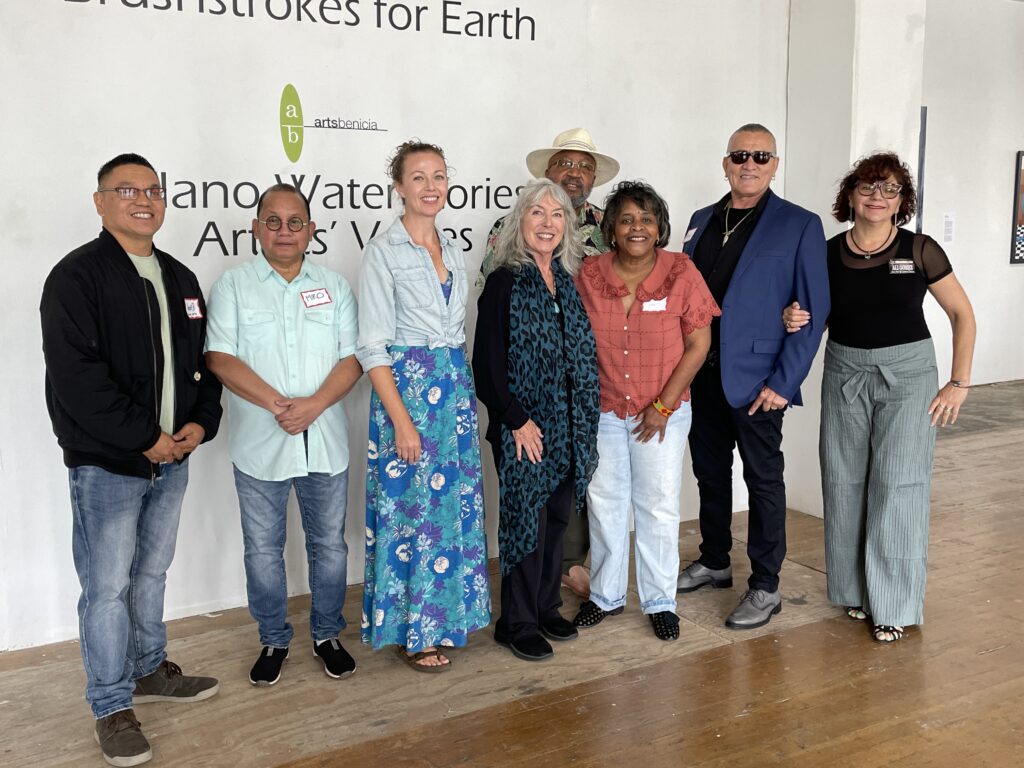
Arts Benicia received a 2023-2024 Creative Corp Capital Region Grant, funded in part by the California Arts Council and the Sacramento Office of Arts & Culture. The grant focused on the southern quartile of Solano County: Benicia, Vallejo, Fairfield, and Suisun. Arts Benicia created three exhibitions titled Solano Water Stories that included the Kickoff Exhibition at the Benicia Commanding Officer’s Quarters, (COQ), November – December 2023, Artists’ Voices at the Temple Art Lofts (TAL), in Vallejo, May – June, 2024, and finally at the Suisun City Community Climate Fair, June 29, 2024. Additional events included through this grant were Family Art Day on December 3. the Arts Benicia Art Talk, Ripple Effect on Wednesday, December 6, 2023, and finally a media campaign featuring original artworks and educational exhibitions across Solano County, including displays on SolTrans regional buses. Solano Water Stories is about the history of water, water conservation, and climate change mitigation practices in Solano County. READ THE FULL SUMMARY AND SEE THE EXHIBITIONS HERE.
Be a Sponsor
Help bring high quality exhibitions to our community and gain exposure for your business or organization.
So Many Reasons to Give ... So Many Ways of Giving
Arts Benicia is supported by membership, grants, sponsorships, donations, and fundraising events. Exhibitions and docent-led tours are free to the public. There are many ways you can be part of this terrific community, and many ways to support our mission.
Our Community
Arts Benicia’s mission is to stimulate, educate, and nurture cultural life in Benicia primarily through the visual arts. We provide exhibitions, educational programs, classes, and opportunities to connect with the community in celebration of creativity. Find out more about Arts Benicia.
Artist Opportunities
Arts Benicia regularly offers opportunities to apply for entry to juried exhibitions and special open to all artists.
Arts Benicia’s broad exhibition program also includes special group and solo exhibition opportunities reserved for our Artist Members.
Youth Art Education
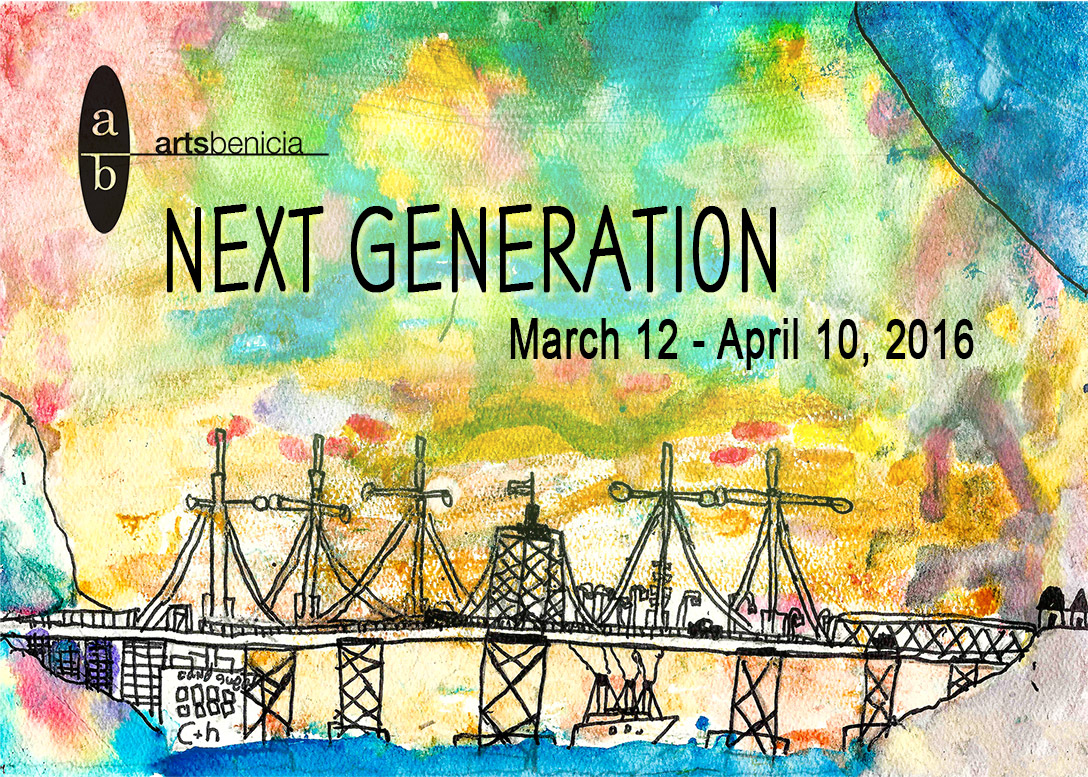
Arts Benicia is committed to providing hands-on children’s and teen art programs through the Next Generation student exhibit, Family Art Days, Art Exploration, Extended Learning Opportunity Program, and STEAM Wheel art classes, and teaching artist programs in partnership with the Benicia Unified School District.
Classes for Adults
Learn something new and explore your creativity in art classes at Arts Benicia. Try your hand at drawing, painting, collage, and more. Our gifted artist teachers provide skilled instruction in both online and classroom settings. Check out our class listings.
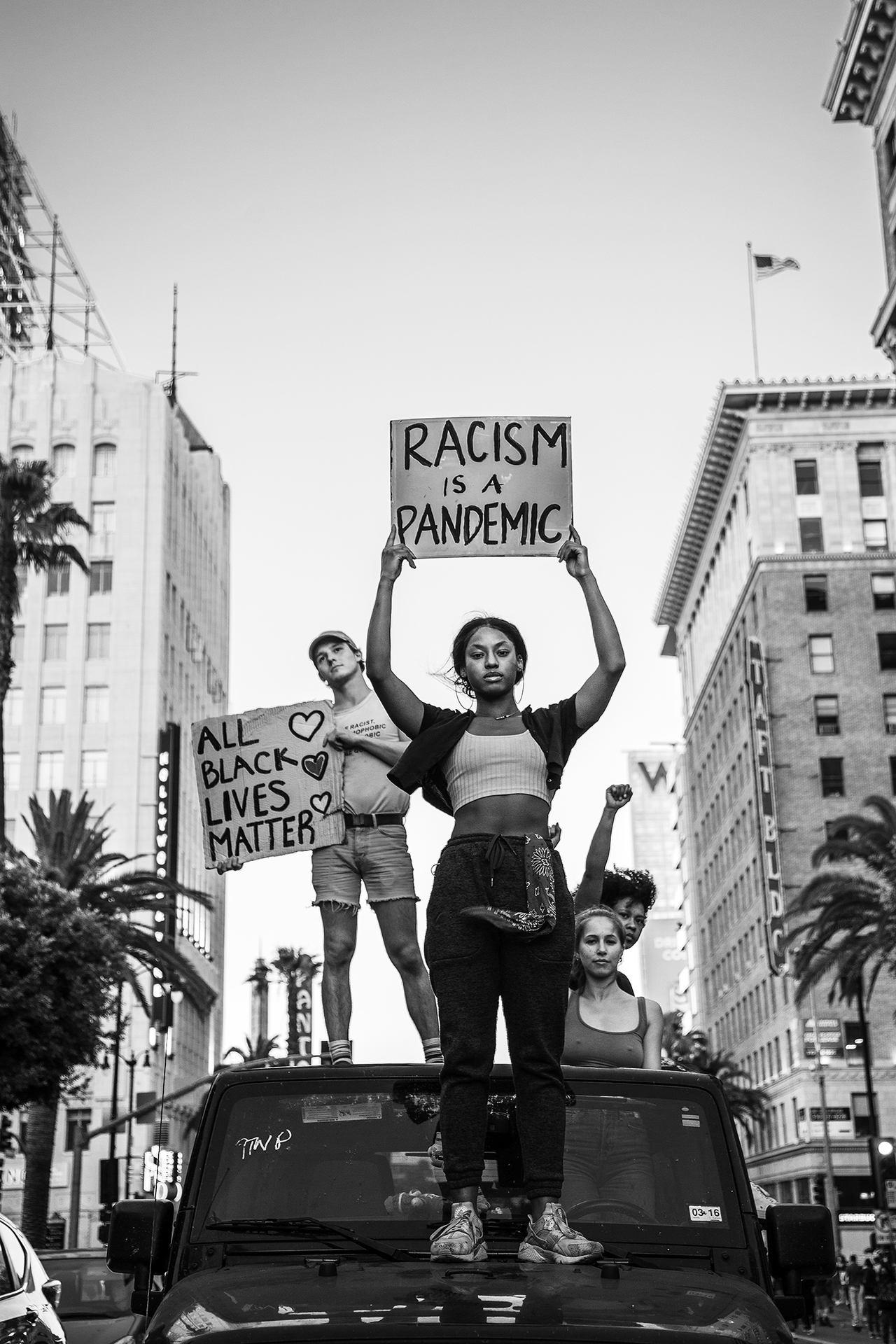
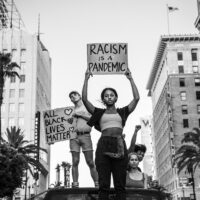
Artwork: Taz Essa “Racism is a Pandemic”
Arts Benicia's Statement on Racial Equity
Arts Benicia is committed to operating with an awareness of the complex inequities that exist in society due to the long-term effects of historical legacies and practices on opportunity, access and resources for persons of color as well as for persons in marginalized groups such as those based on gender, sexual orientation, ability, immigration status, age, class, and other factors. These inequities exist in our local region, where wealth and positions of power and privilege are not equitably distributed among all populations. In particular, Arts Benicia serves the population of Solano County, of which nearly 50% are persons of color.
Our awareness of racial inequities will constantly inform our policies and practices, the development of programs, accessibility, hiring, outreach, scholarship programs, and our interactions with our constituency.
We stand in solidarity with artists, activists and community leaders calling out against institutional racism, inequality and injustice in any form. We deeply appreciate the many arts and social justice organizations that are seeking to make real and lasting change.
In our work, we will strive to
- reflect the racial and cultural diversity of our local region;
- ensure inclusion in our programs, reaching out to engage historically excluded groups or individuals; and
- maintain a spirit of learning, adaptation, and willingness to change to achieve equity.
Resources from the California Arts Council
The California Arts Council’s vision is “a California where all people flourish with universal access to and participation in the arts.” To support the achievement of this vision, the CAC has produced a series of racial equity learning resources available on their website.
The CAC has also recently published a statement on Asian American and Pacific Islander communities and resources for education and support.
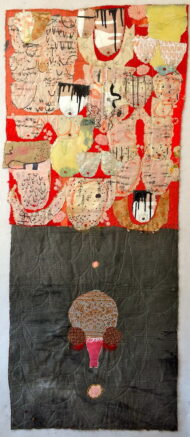
Arts Benicia Land Acknowledgement
Arts Benicia, now located in the Commanding Officer’s Quarters along the Carquinez Strait in Benicia, is on land once occupied by the Patwin (native American people). The Patwin, also known as the Suisun, traversed the area along the waterways. They hunted in the Suisun Marsh and gathered acorns from wooded areas to the north. They lived in bands of about 100 and spoke the Wintun dialect. They traded for obsidian to make projectile points, which have been found throughout the area. Large bedrocks with hollows for grinding acorns also remain as reminders of their time on the land. Patwin culture was gradually diminished or lost as these lands were taken over by missions of the Catholic Church and later the Mexican government, followed by the state of California, upon its establishment in 1850. By the time construction of the Commanding Officer’s Quarters was begun in 1859, only about 100 Patwin remained in the region, many living in a settlement near the present location of Solano Community College in Fairfield. Please join Arts Benicia in reflecting and honoring the invaluable contributions made by the Indigenous culture bearers who came before us and are here now. Read more … the official site for the Yocha Dehe Wintun Nation.